

Product Overview
Designed in house by Performance Nootropics.
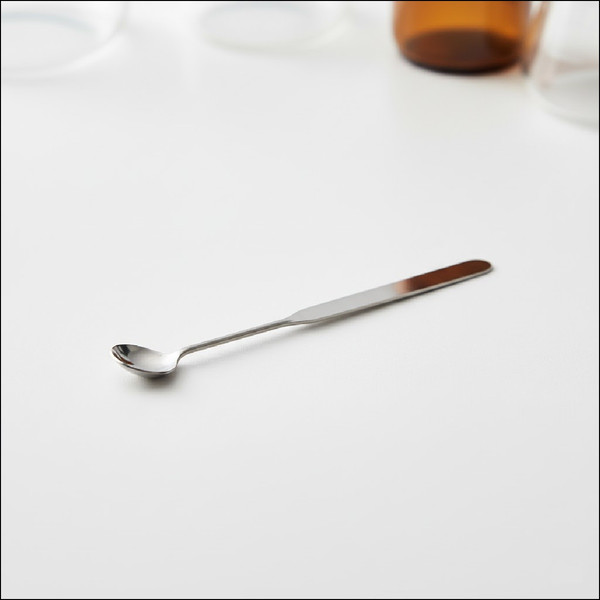
This design, often referred to in laboratory settings as a micro-spatula, is engineered for precision, hygiene, and efficiency when handling high-potency research compounds like Nootropic's powders.
Here is why this specific "perfected" form, designed in house by us, is way above the industry standard with Dual-Utility Geometry, High-grade 316 Stainless Steel, easy clean monolithic design, ergonomics and precision, volumetric capacity, perfected weight and length.
Dual-Utility Geometry
- The design solves two distinct laboratory needs with one tool
- The Micro-Spoon (End A): The rounded, shallow scoop is designed for volumetric consistency. Its small radius allows you to reach into narrow vials or containers that a standard kitchen spoon couldn't enter.
- The Flat Spatula (End B): This is for micromanipulation. It allows you to scrape the walls of a container, level off a dose for accuracy, or break up small clumps of powder without losing material to static or surface area.
High-Grade 316 Stainless Steel
- Non-Reactive: Nootropic powders often contain delicate bioactive compounds (like erinacines). Stainless steel is chemically inert, meaning it won't react with the powder or leach metallic ions into your sample.
- Electrostatic Neutrality: Unlike plastic scoops, polished steel minimizes "static cling," ensuring that the entire measured dose actually leaves the spoon rather than sticking to the sides.
"Easy-Clean" Monolithic Design
- Zero Crevices: The spoon is forged from a single piece of metal. There are no joints, seams, or plastic handle attachments where powder can get trapped. This is critical to prevent cross-contamination between different research batches.
- Autoclave & Alcohol Safe: Because it’s pure steel, it can be sterilized with high heat, UV light, or 70% Isopropyl alcohol without degrading the finish.
Ergonomics & Precision
- Center Grip: The slightly flattened or textured middle section provides tactile feedback, giving you better control over the "tilt" of the spoon when measuring milligram-level doses.
- High Polish: The mirror finish reduces surface friction, allowing the powder to slide off smoothly and completely.
Volumetric Capacity
- 0.1 mL scoop: The most common "micro-dose" size used for high-potency research is the 0.1 mL scoop.
Weight and Length
- In a laboratory setting, the weight of a standard stainless steel micro-spatula (the "perfected" dual-ended design) is generally optimized for a balance between durability and high-precision handling.
- Tactile Feedback: A tool that is too light (like plastic) lacks the "heft" required for steady, micro-milligram movements. At 8 grams, the tool provides enough resistance to prevent accidental tremors during the measuring process.
- Length: With a length of 5.5 inches, it creates a balance point with it's design ensuring the center of gravity is in the middle of the handle. This allows the researcher to pivot the tool between the thumb and forefinger with minimal effort, switching from the "scoop" end to the "spatula" end seamlessly.
- Durability: At this weight, the steel is thick enough to resist bending or snapping when breaking up compressed "cakes" of powder, yet thin enough to remain precise.